


For decades, the sequel was the bedrock of the video game industry. If a game worked, you built “Part 2.” It was the safest way to leverage IP and guarantee a Day 1 sales spike.
But on mobile, that logic is fundamentally broken.
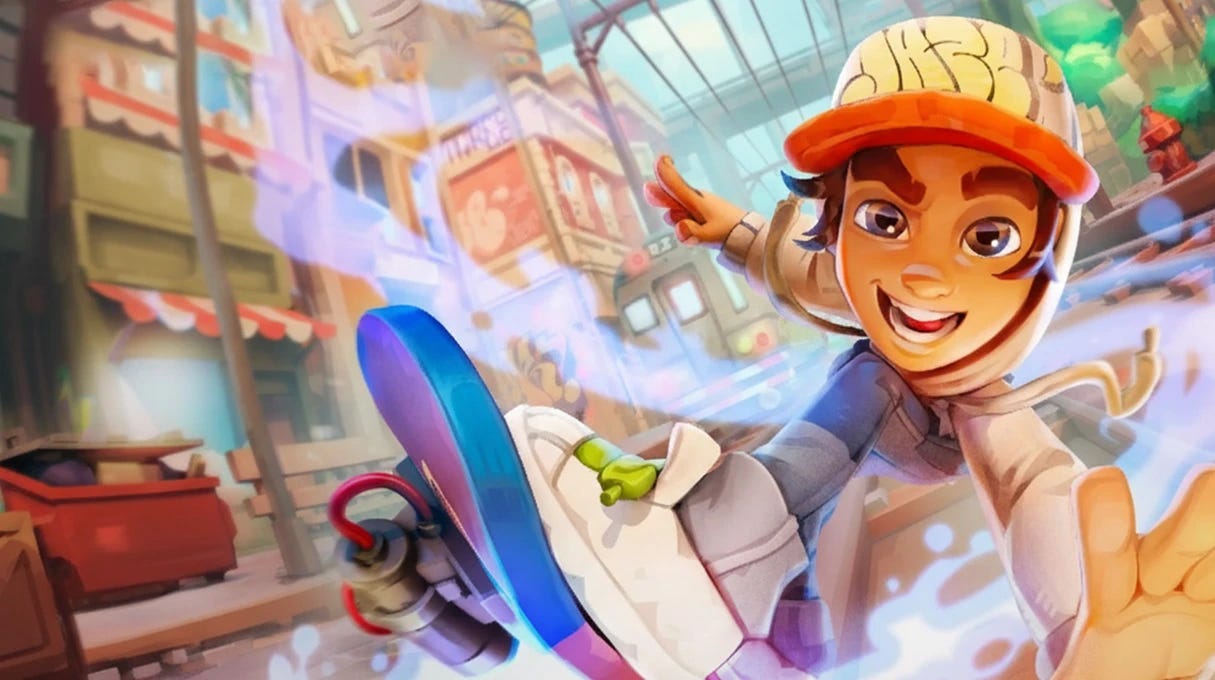
The recent launch of Subway Surfers City by Miniclip is the latest case study in the “Sequel Trap.” Despite the original Subway Surfers being one of the most downloaded games in history, the new title is generating less than 5% of the legacy game’s monthly revenue.
The Conflict: Legacy vs. Novelty
When a mobile game becomes a hit, it stops being a “product” and becomes a “habit.” Players invest years in their accounts. They have favourite characters, hard-earned skins, and a deep sense of familiarity with the UI.
A sequel asks them to throw all of that away.
Unlike a console player who finishes a 40-hour story and is ready for the next one, a mobile player is never “finished.” By launching a separate app, you are forcing your most loyal users to choose between two versions of your brand. You are fragmenting your own audience and doubling your UA costs.
The Evolution Model: The Supercell Approach
Compare the sequel model to the “Evolution Model” used by Supercell. When Clash Royale revenue dipped in 2022, they didn’t ship a new SKU. They rebuilt the game from the inside.
They introduced “Card Evolutions”, a mechanic that allowed players to upgrade their existing collection rather than having to learn new cards. They simplified the progression system for returning players.
The results? A 118% revenue spike on their anniversary and lifetime revenue crossing $4.9 billion.
The Strategy for 2026
The lesson for publishers is clear: Mobile is a single-SKU market.
If you have a hit title, your focus should be on “Internal Sequels”, massive updates that change the gameplay feel without forcing a migration.
If you must launch a new game, it should be a genre-pivot, not a direct successor.
Otherwise, you aren’t competing with the market. You are just cannibalising yourself.